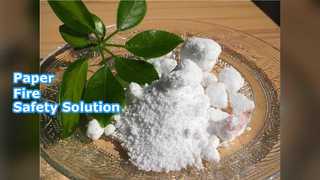
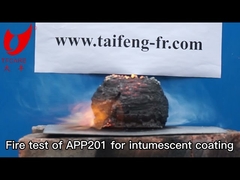
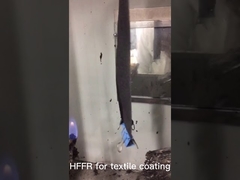
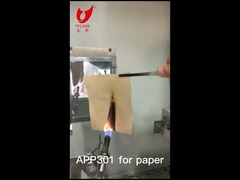
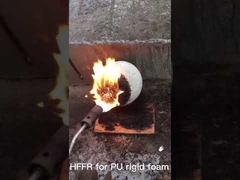
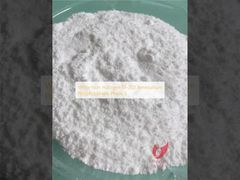
Brief: Join a quick walkthrough that focuses on what matters to users and operators. In this video, you'll see a detailed demonstration of how to apply the low arsenic ammonium polyphosphate flame retardant to paper surfaces and through impregnation methods. Learn about the correct application techniques, dosage recommendations, and the key specifications that make this product effective for various paper types, including decorative and construction paper.
Related Product Features:
Low arsenic content, with a maximum of 2ppm, ensuring safer handling and environmental compliance.
High solubility in water, dissolving over 150g per 100ml at 25°C for easy preparation of solutions.
Contains at least 59.5% P2O5 and 17.5% nitrogen, providing effective flame retardant properties.
Suitable for surface coating and impregnation methods on various paper types like wallpaper and construction paper.
Low water insolubility of ≤0.02% ensures uniform application and minimal residue.
pH value of 5.0-7.0 in a 10% water solution is mild and compatible with paper materials.
Packaged in 25kg bags with options for palletized or non-palletized FCL shipments.
Stores easily in dry, cool conditions with a one-year shelf life, protected from moisture and sunlight.
FAQs:
What are the main application methods for this ammonium polyphosphate flame retardant on paper?
It can be applied by brushing or spraying a flame retardant solution onto the paper surface for surface-level protection, or by impregnating the base paper in a 10%-20% aqueous solution for overall flame retardancy, suitable for various papers like decorative and construction types.
How does the low arsenic content benefit users and the environment?
The arsenic content is limited to a maximum of 2ppm, reducing health risks during handling and minimizing environmental impact, making it a safer choice for flame retardant applications in paper products.
What is the recommended storage condition and shelf life for this product?
Store in a dry and cool place, avoiding moisture and direct sunlight, to maintain effectiveness for up to one year, ensuring the product remains stable and ready for use.