Halogen-Free Flame Retardant for Epoxy

Halogen Free Fire Retardants
December 25, 2025
Category Connection: Halogen Free Fire Retardants
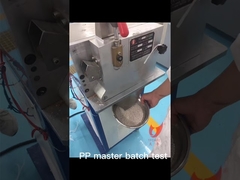
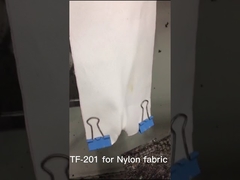
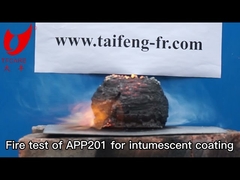
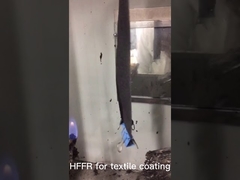
Brief: Step into our short showcase to explore the solution’s standout capabilities. In this video, you'll see how Halogen-Free Flame Retardant Aluminum Hypophosphite works in epoxy adhesives through detailed demonstrations of its endothermic reactions, insulating layer formation, and volatile suppression mechanisms. Discover its high thermal stability and efficient flame-retardant performance in real-world applications.
Related Product Features:
  • Halogen-free and environmentally friendly, meeting modern safety standards.
  • High phosphorus content (≥42%) ensures efficient flame retardancy with small addition amounts.
  • Excellent thermal stability with decomposition temperature T99%≥290°C.
  • Forms an insulating char layer that shields materials from direct flame contact.
  • Very low solubility in water (≤0.1 g/100ml) for stable performance.
  • Good processing performance and compatibility with various polymers like epoxy, PBT, PET, and PA.
  • High whiteness (≥95) for applications requiring aesthetic quality.
  • Endothermic reaction absorbs heat to slow combustion and reduce material temperature.
FAQs:
  • What makes aluminum hypophosphite a halogen-free flame retardant?
    Aluminum hypophosphite is an inorganic phosphorus-based compound that contains no bromine or chlorine, making it an environmentally friendly, halogen-free flame retardant option.
  • How does aluminum hypophosphite work to retard flames in epoxy adhesives?
    It works through multiple mechanisms: an endothermic reaction absorbs heat, it forms an insulating char layer on the material surface, and it dilutes flammable volatiles, collectively slowing combustion.
  • What polymers is this flame retardant suitable for?
    It is suitable for flame retardant modification of various polymers including epoxy adhesive, PBT, PET, PA, TPU, ABS, and EVA, often used with stabilizers or synergistic flame retardants.
  • What is the typical addition amount for effective flame retardancy?
    Due to its high phosphorus content and efficiency, it requires only a small addition amount to achieve effective flame retardant performance in the final product.
Related Videos

Halogen Free Flame Retardant MCA

Halogen Free Fire Retardants
December 25, 2025

Halogen Free Flame Retardant for PA6 PA66

Halogen Free Fire Retardants
December 25, 2025

Wood Flame Retardant For Plywood Timbers

Wood Flame Retardant
December 25, 2025

Paper Fire Retardant Odorless APP

Paper Fire Retardant
December 25, 2025

Halogen Free Flame Retardant APP Phase II

Halogen Free Flame Retardant
December 25, 2025

Ammonium Polyphosphate Fire Retardant Paper

Paper Fire Retardant
December 25, 2025

Water Based Fire Retardant Solution

Paper Fire Retardant
December 25, 2025

APP Flame Retardant For Textiles

Ammonium Polyphosphate Flame Retardant
December 25, 2025

Ammonium Polyphosphate Flame Retardant for Coatings

Ammonium Polyphosphate Flame Retardant
December 25, 2025