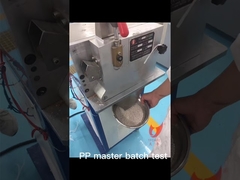
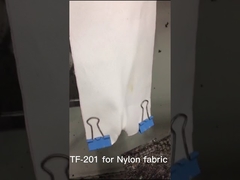
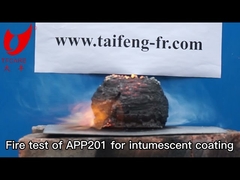
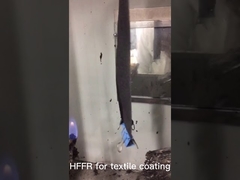
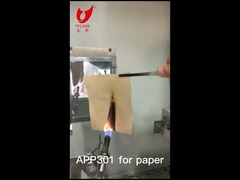
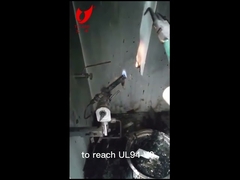
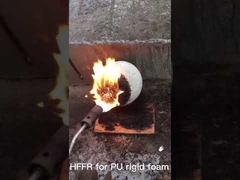
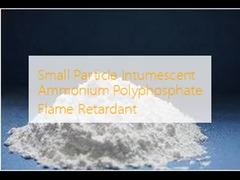
Brief: This video provides a brief case-style overview of how Halogen Free Flame Retardant Ammonium Polyphosphate Phase II (TF-201) enhances steel fire protection. You will see how this intumescent coating component works with melamine and pentaerythritol to form a protective carbon layer, absorbing heat and stopping heat transfer to meet building design requirements.
Related Product Features:
Halogen-free ammonium polyphosphate (APP) serving as the acid donor in intumescent flame retardant systems.
Suitable for both water-based and solvent-based coatings with customizable addition volumes and formulas.
Decomposition temperature exceeding 275°C, ensuring stability and performance under high heat.
Low solubility in water (less than 0.45% at 25°C) for improved durability in various environments.
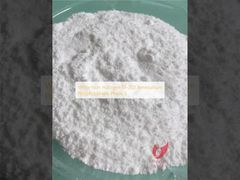
White powder appearance with an average particle size (D50) of 15–25µm for easy mixing and application.
Contains high P2O5 content (≥71%) and nitrogen (≥14%) for effective flame retardancy and carbon layer formation.
Neutral pH range (5.5–7.5) and low viscosity in solution for compatibility with diverse coating formulations.
Long shelf life of over 2 years when stored in well-sealed conditions to maintain product integrity.
FAQs:
What is the role of Ammonium Polyphosphate Phase II in intumescent coatings?
Ammonium Polyphosphate (TF-201) acts as the acid donor in the intumescent system. When heated, it works with melamine (gas donor) and pentaerythritol (carbon donor) to form a protective, insulating carbon layer that expands, absorbs heat, and prevents flame spread.
Is TF-201 suitable for both water-based and solvent-based coatings?
Yes, TF-201 is formulated to be compatible with both water-based and solvent-based intumescent coatings. The addition volume and specific formula can be adjusted based on your application needs; reference formulas are available upon request.
What is the decomposition temperature of TF-201, and why is it important?
TF-201 has a decomposition temperature above 275°C. This high thermal stability ensures that the flame retardant remains effective during the initial stages of a fire, contributing to the formation of the intumescent carbon layer that protects steel structures from rapid strength loss at elevated temperatures.
How should TF-201 be stored, and what is its shelf life?
TF-201 should be stored in a well-sealed environment to prevent moisture absorption. Under these conditions, it has a shelf life of more than 2 years, maintaining its performance and specification integrity over time.